Address
304 North Cardinal St.
Dorchester Center, MA 02124
Work Hours
Monday to Friday: 7AM - 7PM
Weekend: 10AM - 5PM

Address
304 North Cardinal St.
Dorchester Center, MA 02124
Work Hours
Monday to Friday: 7AM - 7PM
Weekend: 10AM - 5PM
 Byarctic
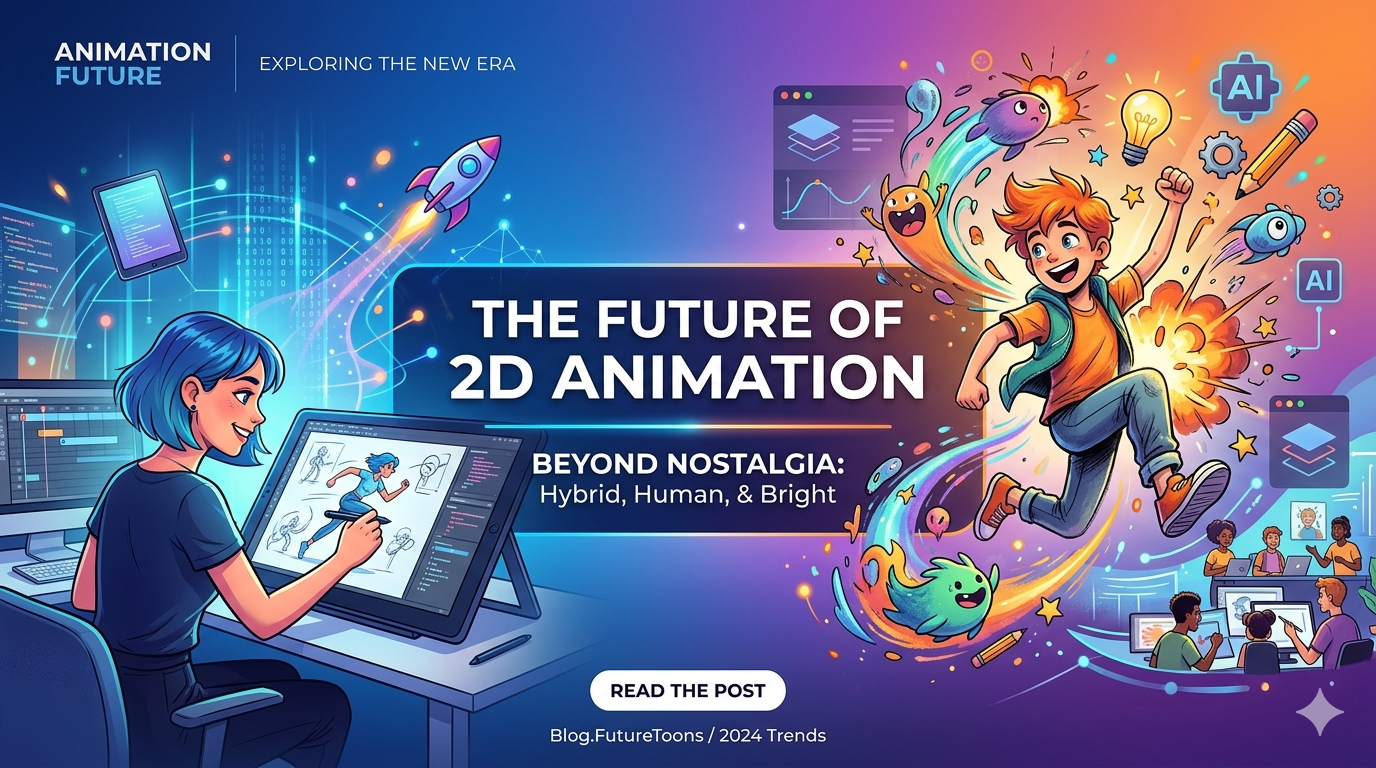
For years, critics have predicted the demise of 2D animation. Every time a major studio pivots toward a hyper-realistic 3D blockbuster, the same old chorus chimes in: Traditional animation is a dying art. But the internet has declared 2D animation dead dozens of times, yet it continues to bounce back. Today, we aren’t witnessing the end of two-dimensional art; we are experiencing its most exhilarating evolution.
In a digital landscape crowded with algorithm-smoothed, flawlessly lit 3D models, 2D animation is thriving precisely because of what it does best—embracing a style that is unapologetically creative, expressive, and human.
Here is a look at what is actually driving the future of 2D animation.
The future of animation isn’t an “either/or” battle between 2D and 3D. Instead, the most groundbreaking projects are tearing down the walls between them to create jaw-dropping hybrid styles.
Productions are leveraging the structural benefits of 3D alongside the evocative texture of hand-drawn art:
Artificial Intelligence is a hot-button topic in any creative industry, but in the 2D space, its immediate future lies in automation rather than creation.
Historically, 2D animation has been notoriously labor-intensive, requiring hundreds of thousands of individual sketches. Emerging AI and machine learning tools are beginning to take over the tedious grunt work:
By cutting down production times by up to 70% on repetitive tasks, technology is lowering the barrier to entry. This allows smaller indie studios and solo creators to produce high-end, long-form content on a fraction of a traditional budget.
The explosion of streaming platforms (Netflix, Crunchyroll, Amazon Prime) has completely changed how content is greenlit. Broadcasters are no longer chasing the exact same demographic. There is a massive, global hunger for adult animation, experimental shorts, and highly stylized indie series.
Because 2D animation acts as graphic design in motion, it allows for a level of abstraction, surrealism, and emotional stylization that 3D often struggles to capture. Shows like BoJack Horseman or gaming phenomenons like Cuphead and Hollow Knight use the visual freedom of 2D to tell stories that feel deeply personal, gritty, or whimsical in ways that hyper-realism simply cannot replicate.
Animation has migrated from the silver screen straight into our pockets. On platforms like TikTok, Instagram, and YouTube, short-form 2D animation reigns supreme.
2D animation scales beautifully. It can live seamlessly on a tiny smartphone screen, inside an interactive mobile app, or blown up on a giant billboard without dealing with the complex rigging bugs or “uncanny valley” lighting issues of 3D. Brands are increasingly turning to bespoke 2D character designs to cut through the digital noise and humanize their corporate identity.
If better technology automatically made better art, we would all be deeply moved by spreadsheets by now.
The future of 2D animation is secure because its value doesn’t rely on technological spectacle; it relies on clarity, character, and emotional punch. As the tools get smarter and faster, the human hand behind the screen matters more than ever. 2D isn’t going anywhere—it’s just getting started.
What do you think? Are you a fan of the new hybrid 2D/3D styles, or do you prefer the classic, purely hand-drawn look? Let’s talk about your favorite animated projects in the comments below!